Showing posts with label Art. Show all posts
Showing posts with label Art. Show all posts
March 13, 2017

January 21, 2014
Van Gogh's teaching unit
This teaching unit is about the painter Van Gogh. It is aimed at 12 year old kids and it deals with Art and ICT contents.
On the Scribd file below you have the teaching unit with the goals, contents, activities and assessment. You are welcome to use it in your lessons.
May 30, 2012
Andy Warhol
I’ve designed, with the help of the language assistant, a lesson plan about the artist Andy Warhol. It is aimed at 11/12 year olds and as the title suggests, it deals with Art contents.
Below you have the teaching unit sketch in Galician but you also have the digital activity in English with all the information you need to put it into practice. It shouldn’t be a problem if you don’t understand the document in the Galician language.
I hope you like it and you use it in your Art lessons.
I hope you like it and you use it in your Art lessons.
Andy Warhol
December 1, 2011
Thanksgiving Day
This year for the first time we have been working on this important American date. We have learnt about the Thanksgiving History through a video, we have learnt some vocabulary with an activity played on the interactive whiteboard, we have coloured some pictures, we have written our ‘thanks for’ and we have designed our own Pilgrim and Indians hats in the Art lessons.
Teachers can realize the variety of possibilities this topic offers, most of the skills and different competences are innate to it and several subjects can be involved (History, Art, Religion, Citizenship, Language).
The video below was the one we watched in the classroom to understand the Thanksgiving origins.
We have played this game below on the interactive whiteboard in order to learn some vocabulary.
Older students wrote some sentences following the pattern ‘I’m thankful for (my family, my cat, …).
The next box shows some pictures with the Pilgrim and Indian hats.
 |
 |
| Make a free slideshow design |
March 22, 2011
St. Patrick's Week
This will be a flash post about St. Patrick’s Day, just to tell you my teaching experience at school.
We have been working through this special date along the past whole week in the different subjects I teach: English, Art and even Science.
The contents about this date for the different subjects are:
- English: traditions, sociocultural aspects, Ireland as an English speaking country, vocabulary (leprechaun, shamrock…) …
- Art: felt-tip pen colouring, combining colours, cutting and tracing, templates, using paints and paintbrushes…
- Social Science: Irish traditions and geography.
Students learnt some vocabulary related to this special date, they read some texts and answered some questions, and they played games.
In the Art lessons, the higher-level students coloured a leprechaun poster and also cut some shamrocks in green cardboard paper in order to decorate the school. Students in lower levels coloured some leprechauns and some pots of gold, and they made a leprechaun face from a paper plate.
You can download in the link below a file with the worksheets on St. Patrick’s Day that I used in the classroom.
On March 17th, students wore green clothes and other stuff in order to commemorate the famous Irish date. I uploaded a video with some photos.
March 10, 2011
Winter
Spring is almost here but before it arrives I want to publish the post about Winter. I’m sorry I couldn’t do it earlier, but it will remain in the blog and perhaps you will be able to use it the following year.
As I told you in the past, ‘seasons’ are quite an interesting topic to work at school because they relate to Science, Art and other subjects.
My Winter lesson plan is aimed at my 11/12-year- old Art students, although it can be adapted to any level changing the difficulty of the activities and the goals. At the end of the post, you can see some Winter resources for other levels.
The contents in my lesson plan are:
Art contents: different colouring techniques (paint, wax crayons …), collage, scissor skills, fine motor skills.
ESL contents: all the language dealing with Winter, how to borrow materials, material names, the modal verb can, present simple.
Science contents: winter facts, hibernation and migration, weather.
The unit sketch is rather similar to the autumn one.
The first lesson covers a kind of brainstorming about what we know and what we can add in the English language. I write an outline of the ideas on the board:
- Winter months.
- Start and end dates.
- Weather.
- Winter clothes (scarves, coats, mitten, boots, gloves, hats).
- Sports (ice-skating, skiing, snowboarding, go on a sleigh).
- Colours.
- Special vocabulary: snow, snowflakes, snowman, snowfall, ice.
- Special dates: Christmas, Peace Day, St. Valentine’s Day, Carnival, Pancake Day, St. Patrick’s Day.
- Animals (migration and hibernation).
- Facts: shorter days, longer nights.
The last half of the lesson students start to work on the Winter poster.
The activities for the second lesson are reviewing all the information about the season, watching a video and working on the poster.
The next lessons deal with finishing the poster and writing some essays.
Students write two different compositions, one about Winter and the other about the poster and its description. In order to write the composition about Winter, I give them a list of questions that have to be answered in the form of a text.
The questions are:
- When does Winter start?
- When does it finish?
- What’s the weather like?
- What clothes do you usually wear in Winter?
- What sports can you practice?
- What happens to some animals?
- What special dates do you commemorate?
As you can see, there are many contents involved and that’s the reason why we spent a long period of time working on it, the unit was about two months long.
The results are:


Winter song: lower levels.
Snowy weather: advanced video
Winter websites with worksheets and facts.
Winter Websites
January 4, 2011
Shapes
The activities I’m presenting are suitable for 6-7 year-old students, they were thought for the Art subject, although some of the activities are also appropriate for Maths.
The Art contents involved are: drawing and recognizing shapes, shapes in Art, Tangram, space representation and abstract art using shapes.
The ESL contents are: shapes vocabulary, colours, objects that represent shapes (dice, wheel)…
The teacher, to start, will introduce the vocabulary for shapes with the help of some pictures and also with a song.
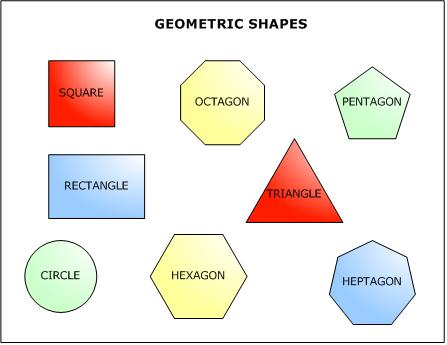
Once the kids get familiar with the name of the shapes, they will have to recognize shapes in ordinary objects they come across every day, in order to do that, there are many books about shapes you can use or, if you don’t have any, you can use pictures from the web.

The book I use is Agatha’s Shapes published by Gaviota.
Students can also practice shapes playing snap (I use the card game by Usborne but teachers can make their owns cards).
From now on, students will work on the Art aspect of Shapes. First, the teacher will introduce the Chinese game Tangram explaining the origins and the rules.
The teacher will give each of the students a Tangram worksheet, students will have to recognize the shapes, colour them and cut them.

Before designing their own tangrams, the teacher will give the students some models they will try to copy and say what they represent. After that they will design their own tangrams and they will have to show them to the rest of the students, the students will have to guess what they are representing.
The final task about Shapes will deal with creating an abstract picture using shapes and then using colour to improve its presence. Students will make a frame for their pictures.
Watch the slideshow for results:
Some ideas to work with shapes in higher levels:
- Abstract Art (Mondrian: line, shape, color): http://www.kinderart.com/arthistory/abstract.shtml
- Cubism (Picasso portraits): http://teachkidsart.blogspot.com/2009/06/wild-n-crazy-picasso-portraits.html
More resources on the following links:
January 3, 2011
A multidisciplinary lesson plan: Autumn
Autumn, as well as the other seasons, is a very interesting topic to work at school because it can be approached from different subjects, Science, Art, Language and even Maths.
In my case, the lesson plan on autumn has a place in the Art programme during the first term of the school year. It is planned for the 3rd cycle of Primary Education.
The Art contents involved are mixing colours, collage techniques and painting vocabulary.
The Art contents involved are mixing colours, collage techniques and painting vocabulary.
The contents related to ESL are dates (reading and writing), fruit vocabulary, animals, weather and clothes, and traditions.
The first lesson of the unit will mainly deal with talking about the season, so students and I make a brainstorming on autumn covering the following points:
• Autumn months.
• Start and end of autumn (dates).
• American name.
• Colours.
• Weather – clothes used.
• Fruit and food (acorns, chestnuts, corn, nuts…)
• Scarecrows
• Special Dates (Columbus Day, Halloween, Chestnut Party and Thanksgiving days): what day is it celebrated? where does it come from? traditions involved and why?
• Hibernating animals (hedgehog, beaver, squirrel)
• Autumn facts.
The different points will arise out of the observation of some pictures, see the example below:

At the end, the students and I will design the sketch of an autumn poster.
During the second lesson students will learn a song about autumn and they will work on the poster.
In the third lesson we will watch a video to learn some facts and vocabulary about this season and they will continue with the poster.
The following lessons will help review the contents learned and finish the poster.
This unit can be also adapted for lower levels. A good clipart autumn book to work with lower levels is the one that follows:
You can check how the students performed their task by watching the poster:


Apart from the poster, it’s possible to do some crafts related to autumn or to special dates, depending on the time you have. Some easy craft ideas are:
- Leaves collage.
- Leaves place mat.
- Scarecrow.
- Turkey.

December 30, 2010
A video clip for CLIL: 70 Million by Hold Your Horses
I want to share with you a video clip I’ve recently discovered in a conference by Isabel Pérez. It’s the song 70 million by Hold your horses. Once you watch it, you’ll understand its inherent potential when talking about Art.
I haven’t yet thought through how to exploit in my Art lessons, but I’m very sure that I will use it with the kids in the future and when it happens I will let you know.
I embedded this video clip from Youtube because on its comments, there is a list with all the paintings that appear on it.
I haven’t yet thought through how to exploit in my Art lessons, but I’m very sure that I will use it with the kids in the future and when it happens I will let you know.
I embedded this video clip from Youtube because on its comments, there is a list with all the paintings that appear on it.
December 20, 2010
CLIL experiences: Art workshop in Culleredo
The scribd document that comes next is the one I have used in order to present my materials in the Art workshop in Culleredo. The powerpoint is a too large file and that’s the reason why I had to convert it to pdf. As a pdf file it’s impossible to visualize the videos but I will upload them for you in the nearby future.
Although the presentation didn’t work as expected due to technical problems, I hope you liked and you enjoyed the activities.
You are welcome to write your opinion in my blog and any suggestions you can think of in order to improve it.
I’m too busy right now, but as soon as I can I will post the activity about colours for the digital board (you will be able to download and use it) and some specific information about the different Art units, as well as the autumn videos.
Experiencias CLIL na materia de Plástica
September 16, 2010
Pointillism
I want to offer you a new unit I designed for my Art through English subject, it’s aimed at 11-12 year-old students.
The language contents I deal with are: vocabulary about sea animals (you can choose another topic), there is/are, present continuous and descriptions.
The next stage is about giving colour to the picture by using the Pointillism technique. In order to do that, students must understand the concept, look at some examples and study some Seurat’s works by using Internet. Some useful links are:
Apart from sea animals we can also introduce activities in the sea and means of transport. What can you do in the sea? I can sail, I can swim, I can go snorkeling, I can go fishing… How can you travel in the sea? I can travel by ferry, boat, ship, …


The language contents I deal with are: vocabulary about sea animals (you can choose another topic), there is/are, present continuous and descriptions.
The Art contents are: Pointillism /ˈpɔɪntiˌlɪz(ə)m/, Seraut as a pointillist and space recreation.
In the first stage I give students a sheet with sea animals. It’s possible to print it from the web page:
We work on the vocabulary and the pronunciation. Afterwards I give them a piece of paper with the following description:
In this picture you can see the sea and a thin line of sky. There are some animals resting in the depth of it: two starfish, a crab and a sea turtle. A big octopus, unconscious of the danger, is moving around and a shark is watching it. Some clown fish are swimming nearby. Three seahorses are playing around a group of plants.
Students have to draw the picture in a white sheet of paper. Instead of this description, teachers can make up their own using the vocabulary they want pupils to learn.
 |
| La Parade by Seurat |
Apart from sea animals we can also introduce activities in the sea and means of transport. What can you do in the sea? I can sail, I can swim, I can go snorkeling, I can go fishing… How can you travel in the sea? I can travel by ferry, boat, ship, …

Once they finish the picture, each of them will do a different Pointillist scene and they will describe it in English in the classroom.
It’s possible to add a new stage to this project. It will deal with colouring a portrait using Pointillism in Microsoft Paint.


April 5, 2010
Father's Day Portraits
I haven't forgotten my blog but holidays are holidays and that means no work at all. In this article I will tell you about the project we have made for Father's Day.
The same project but with some changes was made with all the groups at school. In my case, I carried them out with the first cycle and the third cycle of Primary Education.
The idea was that students would prepare a self-portrait to give as a present to their fathers.
The project involved several stages as well as several art techniques depending on the ages and the method used.
The first stage is the same for everybody. We need a digital mug shot of each of the students and then, convert it to a pencil sketch with Photoshop or through some web pages specialized in that:
Once we have the converted photo, we must print it and give a copy to students.
In the second stage, students with coloured pencils have to trace the different lines on the face and the hair and afterwards apply colour to eyes, mouth, skin...
Students learn not to press down when colouring because if they do it their portraits will look like clown faces.
The language contents of this stage are obvious: name of colours and the parts of the face and other features (sideburns, lines, beauty spots, freckles...)
If you want to make a nice background you can use a new technique I've learned, you need to sharpen the graphite of a coloured pencil and keep the shavings, you have to place the shavings in the picture and, with your finger, drag them around the portrait. Students love doing it and showing their dirty fingers.
The next and last stage deals with framing the picture. At this moment, I took into account the age and the abilities of the students and I used different techniques depending on that.
For framing the self-portraits of the first cycle, you can use a piece of thick cardboard in order to stick the picture, corrugated cardboard, foam and tissue paper. The teacher will cut stripes of corrugated cardboard and students have to stick them around their portrait; using some heart models, students will draw the shape on the foam and cut them, the hearts will be used to decorate the frame, it's also possible to do some flowers with the tissue paper.
The language contents would be actions related to art (cut, stick, glue, draw...) and nouns (heart, shape, flower...).
The technique used for the third cycle is more difficult. You need pieces of puzzles, scholar tempera paint, superglue and a thin plank. Students will paint the puzzle pieces with tempera mixing primary colours on a palette. Next they'll glue the picture to the thin plank and the puzzles pieces around the picture.
The linguistic contents are related to painting: the name of primary colours, how to obtain the rest of colours, vocabulary for utensils (brush, palette, tempera, watercolours...)
Finally with all the projects we can make an oral presentation. All the students have to show their job in front of the class and present it to their mates making a description: I have got blue eyes, a small mouth, freckles...
March 25, 2010
Reusing in Art
Reusing in Art is the title of a CLIL project I designed after doing a course for CLIL teachers, it's based on the idea of reusing old things to create new ones.
Here you can read, download and print the teaching unit in Spanish with the goals, the contents, the assessment and the different stages .
Título: “Reusing in Art” Autor: María Isabel
Here it's the web page where I uploaded the project with the reusing song, the recycling story, the game and the craft links.

If you click on the link below, it's possible to download all the files and use them with the students on the digital board without entering the school webpage where I have uploaded. To be able to visualize it, first you''ll have to unzip it.
January 20, 2010
Last Christmas
Christmas is another important date in our subject calendar and a very interesting theme for CLIL projects. Every year, I prepare for my lessons some activities about this special date. In this post, I will show you the activities prepared for this year in my Arts&Crafts course.
Students from the third cycle of Primary have made a snowman paper chain. First, they prepared the paper chain folding a long white piece of paper in several pieces, then, using a template, they drew the snowman on the chain cover and they cut it. They unfolded the paper chain and they decorated the snowmen in the following way:
• Cotton in the body.
• Gomets as bottons.• Blue Crepe Paper as scarves.
• Orange Paper for noses.
• Velvet for hats.
Then, we have also made some snowflakes; by cutting circles on a white piece of paper and folding them several times, students can obtain nice snowflakes, they only need to cut different shapes in the circle.
The main linguistic points involved in this activiy: the materials in English, the body, what the snowmen are wearing.
Students from the first cycle of Primary have made reindeer hats to wear at our Christmas festival. They have coloured and cut some Christmas pictures and a reindeer's head, they stick them on a green metallic cardboard and we used glitter to decorate it. At the slide, you'll see the result. The linguistic points at this activity are related to materials and, above all, vocabulary about Christmas (reindeer, sleigh, Santa...)
At the slide, there is a wide range of decorations for Christmas made by students and other teachers as well as those made by my pupils in Art and English lessons.


November 30, 2009
Halloween & Art
As you can see in my profile, I teach Art through English and, in this article, I would like to talk about one of the topics I use with my Art students: Halloween.
This special date gives a wide range of possibilities to students of English to learn and practice the language. Halloween is a topic with an intrinsic motivation and as a teacher you can take advantage of it and use it in order to work on vocabulary, structures, rhymes, stories, intercultural aspects ... but, above all, Halloween is especially useful for Art lessons since it offers you the chance to decorate classrooms in the same way that English kids do at home to commemorate this date.
On the net it's possible to find lots of resources about Halloween with pictures for colouring and crafts with good explanations. You only have to bear in mind the contents you want to teach and look for the appropriate activity. Apart from the variety of Art contents in each of the activities, there is also a great variety of ESL contents you can introduce (related to the communicative competence as well as the sociocultural one).
Some examples of Art activities about this topic are: collages, posters, crafts, Origami, colouring, ...
In the next slideshare, I show you some of the things made by my students.


Some useful links are:
Subscribe to:
Posts (Atom)